There is a moment that many Lagotto families describe, usually sometime around month ten or eleven.
The puppy who came home with a soft, manageable curl has slowly become something denser, woollier, and harder to make sense of. An appointment is booked with the family's regular groomer. The groomer, skilled, experienced with other breeds, does their best. The dog comes home looking not quite right, or the groomer calls midway through to say the coat is in worse shape than expected.
Nobody did anything wrong. The problem was simply that nobody explained this coat beforehand. What follows is everything we tell our families before that appointment happens.
Why This Coat Is Different
The Lagotto coat is not a poodle coat, and it is not meant to be managed like one. It is a rustic double coat, a woolly, waterproof undercoat beneath curly guard hairs, designed by centuries of working conditions in the wetlands and forests of Romagna. Both the FCI and AKC breed standards are specific about what this coat should be and, just as importantly, what it must not be. This distinction matters especially for families comparing the Lagotto to crossbreeds like the Goldendoodle, where coat type is unpredictable rather than breed-standard.
FCI Standard No. 298 · Coat Section
Federation Cynologique Internationale, the world's governing canine organization
"Of woolly texture, never twisted to form thin cords, semi-rough on the surface, with tight, ring-shaped curls, with visible undercoat. Curls must be evenly distributed all over the body and tail, except on the head, where the curls are not as tight forming abundant eyebrows, whiskers and beard. The topcoat and especially the undercoat are waterproof."
The standard also states explicitly: "If not clipped, the hair tends to become felted as it continuously grows; therefore a complete clipping must be performed at least once a year. The coat must not be formed and brushed up in the fashion of the Poodles and Bichon Frisé breeds. Any excessive hair-styling will exclude the dog from being qualified."
AKC Official Standard · Coat Section
American Kennel Club, United States
"Coat is extremely important in this breed. Hair should be of woolly texture, semi-rough on the surface. Topcoat should be quite thick, and undercoat visible. The combination of the two repels water. A correct coat is never luxurious or shiny. The body is covered with tight ring-shaped curls, not frizz."
Two things follow from the standards that every owner needs to understand at the outset. First, the goal of every grooming appointment is to preserve the ringlets, not eliminate them. A Lagotto that has been blown out, fluffed, or sculpted to look like a Bichon Frisé has been groomed incorrectly for this breed; in a show context, it would be disqualified. Second, felting is not a grooming failure unique to bad care. The standard itself acknowledges that this coat will felt if not clipped. Understanding felting, and preventing it during the transition period, is the most practically important thing this post can teach.
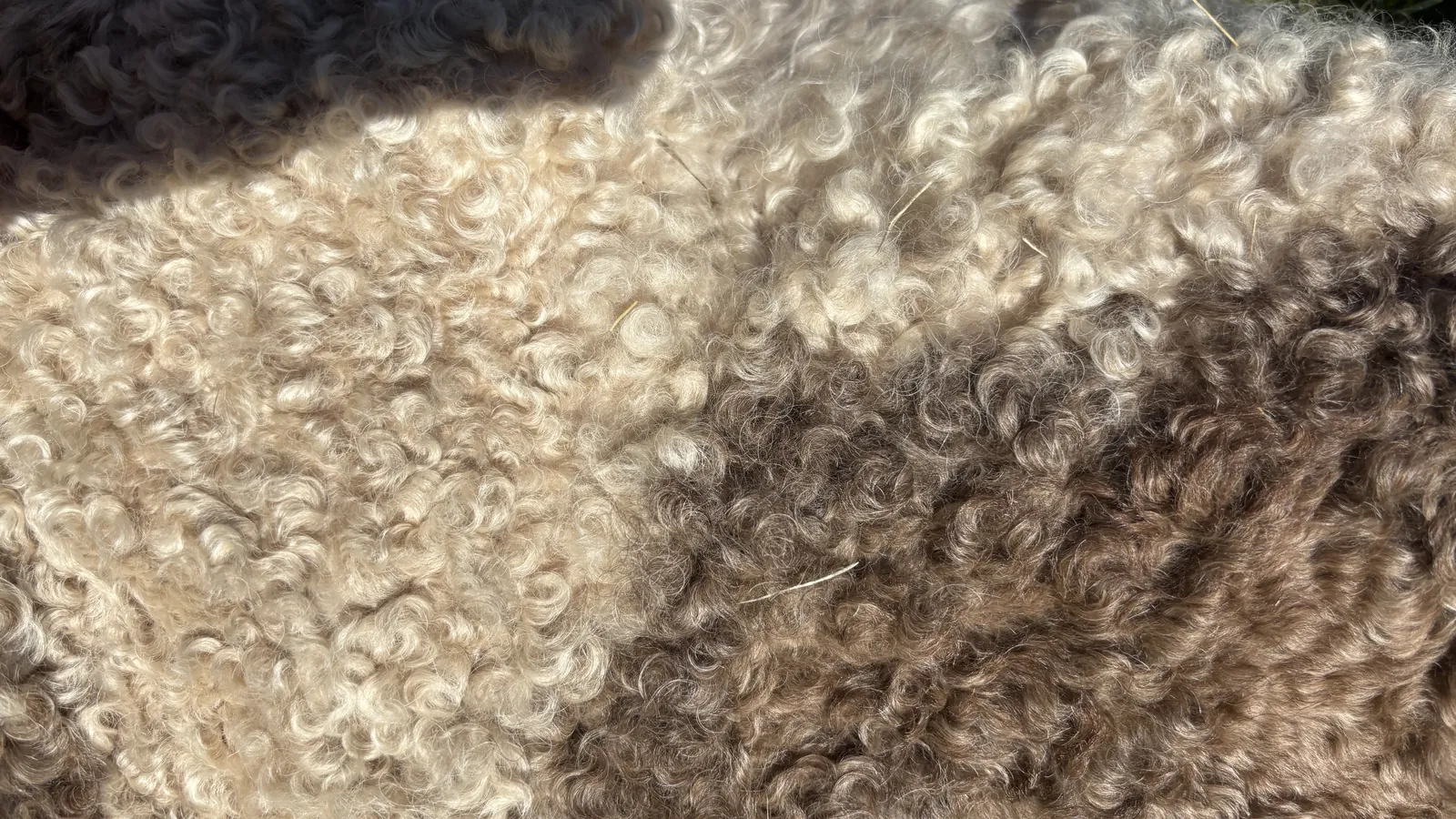
Where I learned this the hard way. When I started breeding I trusted that any competent groomer would know what to do with a Lagotto coat. I learned otherwise the first time a placed puppy came back to visit at thirteen months looking, recognizably, like a Bichon Frisé. The owner had used a well-reviewed local groomer who had simply applied the techniques that worked for every other curly-coated breed. Conditioner. A blow-dry. Brush-outs between appointments. The damage took eighteen months to grow out. Now, before any puppy goes home, we walk every family through these three rules in person and in writing, not because the family will fail at this, but because most groomers will, in the absence of specific instruction. The coat is rustic by design. It needs to be groomed that way.
Three Rules That Apply to Every Grooming Appointment
No conditioner. Ever.
This is the single most common mistake made with well-intentioned Lagotto care. Conditioner softens the curl structure and dramatically accelerates felting. The standard notes that the undercoat must remain waterproof, conditioner actively undermines this. If a groomer's standard process includes a conditioning treatment, ask them to skip it. If a specific stripping conditioner is used for a particular purpose, it must be fully rinsed, and even then this should be the exception. Standard coat conditioner: never.
No blow-dry. Air-dry only.
A dryer that opens and separates the curl finishes the coat looking like a poodle, which is precisely what the breed standard disqualifies. A properly done Lagotto groom finishes with air-drying. Some experienced groomers will clip the coat before bathing rather than after, because bathing softens the coat in a way that makes the final shape less accurate after clipping. If a groomer has never worked on a Lagotto before, this is worth discussing before they begin.
Wide-toothed metal comb. Not a brush.
Running a brush through a Lagotto coat breaks the ringlets and disturbs the curl structure. Between professional appointments, a wide-toothed metal comb used gently, working through the areas prone to knotting to detect and loosen anything before it forms, is the correct tool. The body coat should be left largely alone between appointments. The high-friction areas (see below) need regular attention.
What Your Coat Color Tells You About Your Dog's Grooming Needs
One detail that the breed standards do not emphasise but that experienced groomers and breeders know: coat texture varies meaningfully by color, and this affects how the coat behaves between appointments.
Brown Coats
Looser, More Open Curl
Brown and brown-roan Lagotto tend toward a looser, more open curl structure. The coat is often slightly easier to manage between appointments. The ringlets are visible but less tightly wound.
White & Pale Coats
Woollier, Tighter Curl
Off-white, white with brown or orange markings, and paler coats are typically much woollier in texture with tighter curls. This denser structure means higher felting risk and more frequent comb-throughs needed between appointments.
This is not a quality difference. Both coat types are correct for the breed. It is a management consideration. If your dog has a pale, woolly coat, increase the frequency of your comb-throughs and be more vigilant during the transition period.

The Transition Nobody Warns You About
The Lagotto puppy coat is soft. Curls are present but loose, and the coat is relatively forgiving, manageable even for owners who are new to it. This creates a reasonable expectation that the coat will continue to behave similarly. It will not.
Soft, loose curls. Relatively forgiving and manageable. Professional appointments every four to six weeks. A wide-toothed comb used occasionally in the high-friction areas is sufficient maintenance.
The adult coat begins to come in. The soft puppy coat and the incoming woolly adult coat coexist in a way that creates the right conditions for felting. This is the window that catches most families by surprise. A dog that was fine three weeks ago can arrive at a grooming appointment in genuine trouble. Increase comb-throughs in the high-friction zones to weekly. Consider more frequent professional appointments, every four to six weeks rather than eight.
The transition is complete. The coat is now fully woolly and behaves predictably. Professional appointments every six to eight weeks (for a two-inch coat) with regular comb-throughs in the high-friction areas is a sustainable long-term routine.
Katrien van Gemert, a Dutch breeder and groomer widely regarded as the leading authority on Lagotto grooming, makes a point that is worth understanding here: preparation for the transition begins in the whelping room, not at the first grooming appointment. In her book, Lagotto Romagnolo Grooming: The Art of Keeping It Rustic, and in her webinars on puppy grooming, she demonstrates that nail trimming should start from the first days of life, and breeders should introduce puppies to scissors, clippers, ear handling, and table work well before eight weeks. She recommends clipping the body and thighs with a 12mm blade around five to six weeks of age, not for appearance, but because puppies exposed to clippers early are significantly calmer about grooming for the rest of their lives. This is part of our protocol at Northwest Lagotto. Every puppy that leaves here has already been through ear handling, nail trims, body clipping, and paw pad work before they come home to you.
The Risk: Felting vs Matting
These are not the same thing, and only one is reversible
Matting is a tangle of hairs that can, with patience and the right tool, be worked out. It forms when loose hairs wrap around each other and tighten over time. A metal comb, patience, and a detangling spray can often resolve it.
Felting is different. It is the structural compression of the woolly undercoat fibres, causing them to interlock at a microscopic level rather than simply tangle. Once an area has felted against the skin, the only option is to clip it off and start over. No comb, no tool, no amount of careful working-through will reverse felted coat.
The FCI breed standard acknowledges this directly: "If not clipped, the hair tends to become felted as it continuously grows." This is not a grooming failure or a sign of neglect. It is the nature of this coat, particularly during the transition period. It is entirely preventable with one piece of information delivered at the right time: increase comb-throughs during months seven to eighteen.
If you arrive at the transition period and find the coat has gotten ahead of you: clip it back short and start fresh. The coat will grow back correctly. This is not a failure. It is a reset that most Lagotto owners go through at least once, and usually only once.
Between Appointments: What to Do at Home
Home maintenance for the Lagotto is not extensive. It is specific. Most of the coat, the ringlets on the body, should be largely left alone between appointments. The work is concentrated in a small number of areas and tasks that, done regularly, prevent every significant problem this coat presents.
Finding the Right Groomer
Most groomers have never worked on a Lagotto. The breed is rare enough that this is not a criticism. It is simply a reality to plan around. A groomer who is willing to learn and open to guidance is worth keeping. What matters is that the right conversation happens before the first appointment, not after.
Brief Your Groomer
What to say before the appointment begins
- No blow-dry. Air-dry only. The dryer opens the curl and produces a finish that is incorrect for this breed.
- No conditioner. Standard coat conditioner accelerates felting. Skip it entirely.
- The coat is clipped and scissored to follow the natural body line, not shaped and sculpted.
- When the appointment is done, the curls should remain visible and ringletted. If the dog looks more like a small poodle than a rustic working dog, the finish was incorrect.
- Please include ear canal hair plucking. Ask them to check and clear the canal at every appointment.
- I can provide photos of correctly finished dogs if helpful. (The LRCA and Lagotto Romagnolo Club of Great Britain both publish grooming guides.)
Some groomers will appreciate a reference to the breed standard. Others will prefer to be shown photographs of correctly finished dogs. Both are valid. What matters is that they understand the ringlets must survive the appointment, and that the finish is rustic and working-dog, not groomed-show-dog.
If you want to give your groomer the best possible reference material, point them to the YouTube channel of Katrien van Gemert, whose tutorials demonstrate each technique, eyes, ears, paw pads, body clipping, on actual Lagotti. Her book, Lagotto Romagnolo Grooming: The Art of Keeping It Rustic (co-authored with Camilla Backman), is available through lagotto-grooming.com and is the most thorough breed-specific grooming resource in print. A groomer who takes the time to watch even two or three of her videos before your first appointment will do a meaningfully better job.
Coat Length Options, and What Each One Requires
Both the FCI and AKC standards specify that the clipped coat must not exceed four centimetres, approximately 1.5 inches, and must remain uniform with the silhouette of the dog. That figure is a ceiling, not a target: every correct length sits at or below it. In practice, three working lengths exist for companion dogs, all within the standard.
Lowest maintenance · Most practical for active, working, or muddy dogs
Kept close to the body, never shaved to skin, which the standard forbids and which removes the coat's weather protection. Professional appointments four to five times per year. Between appointments: comb-throughs in the high-friction areas every week or two, ear maintenance, and pad trims are all that is needed. This is the length we recommend for most families in their first year with the breed, while they learn the coat before carrying more of it.
The everyday companion length · Curls clearly visible
Professional appointments roughly every six to eight weeks. At an inch the ringlets are clearly visible, the silhouette is rounded and characteristically rustic, and the coat is still short enough to stay easy to manage. Between appointments, the high-friction areas need regular comb-throughs. There is more coat for debris and compression to work with than at the very-short length. Most families settle here once they have a feel for the breed.
The longest correct length · A real commitment to upkeep
One and a half inches, four centimetres, is the longest coat the FCI and AKC standards permit, and it is a genuine commitment. At this length the high-friction areas need comb-throughs at least weekly, and professional appointments stay frequent. Let it grow past an inch and a half and you are no longer within the standard: the coat becomes heavy enough to lose the crisp ringlet structure, and matting stops being a risk and becomes a near certainty. This is precisely why the standard caps the length where it does. A Lagotto is never to be shaved to the skin, and never to be carried longer than the cap.
Once you know what this coat is designed to do and what it actually needs, it becomes one of the more manageable coats in the dog world. It does not shed. (If allergies are your reason for asking, our hypoallergenic essay covers what that means in practice.) It does not require daily grooming. It just requires the right professional, comb-throughs in the right places, and the transition period understood before it arrives.
The families who navigate this most easily are the ones who were told what to expect before it happened. That is what this post is for.
If you have questions about your specific dog's coat, particularly during the transition period, reach out. It is one of the things we are genuinely glad to help with, long after your puppy has gone home.
MarkWe Are Here for the Life of the Dog
Every family that takes home a Northwest Lagotto puppy has direct access to us, for coat questions, for grooming referrals in the Pacific Northwest, for anything that comes up in the years ahead. We would rather answer a question about coat care at month ten than have a family arrive at a preventable felting situation without anyone to call.
Want to See the Coat in Person?
Photos can only convey so much. If you’re curious about the Lagotto coat, how it feels, how it moves, how it changes, we welcome visitors to our property in Lynden by appointment.
Arrange a Visit →