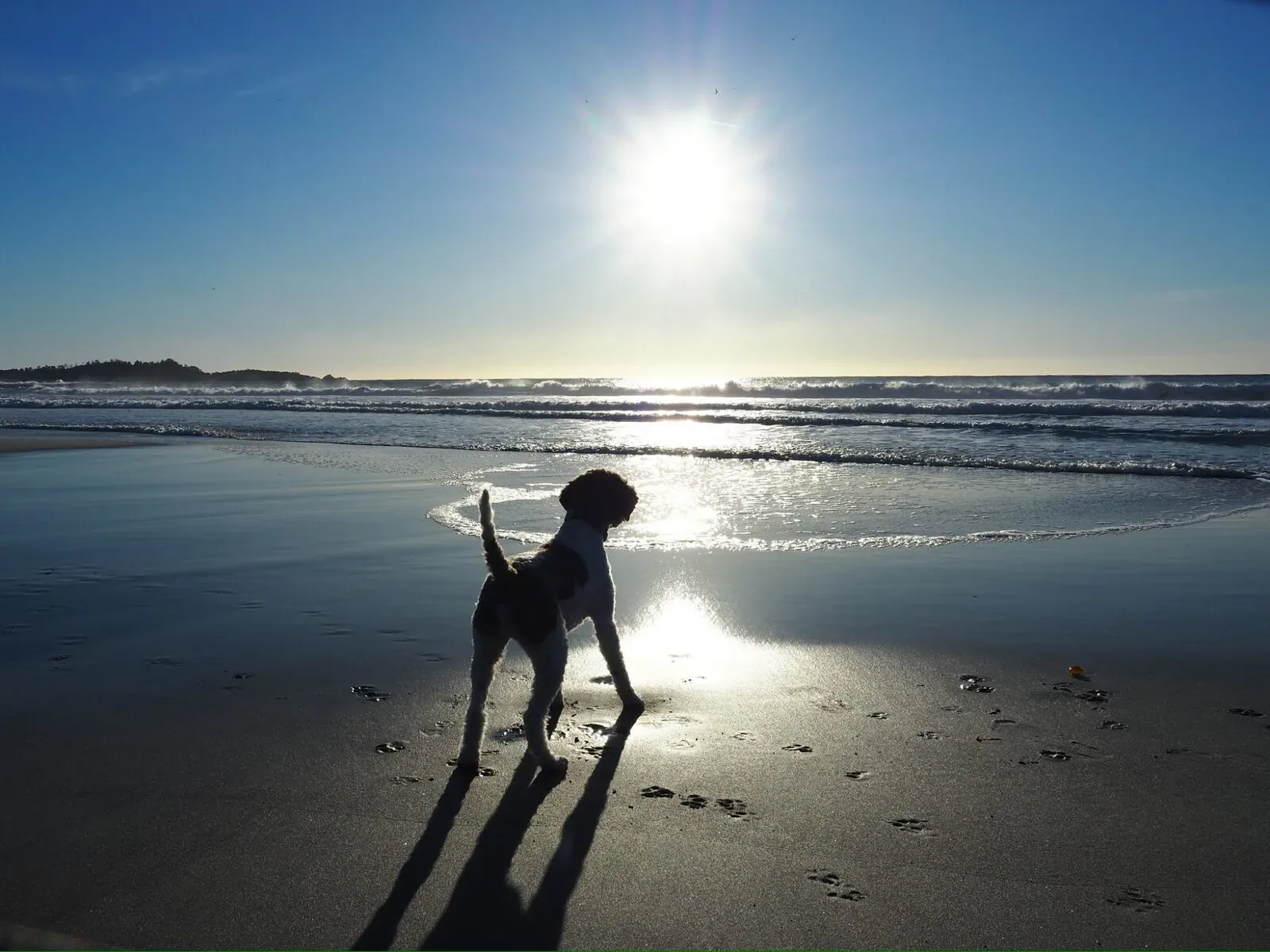
A Lagotto Romagnolo in Greater Seattle
The water dog’s city — where more of our puppies live than anywhere else, where the lakes and the Sound suit the breed, and where the people who work these dogs at the highest level happen to be.
The Community
Where More of Our Dogs Live Than Anywhere Else
Here is a plain fact that surprises people. More Northwest Lagotto puppies have gone home to Seattle and the Eastside than to any other place on the map. Over the years, quietly, a real population of our dogs has grown up around Puget Sound — littermates and half-siblings living a lake or two apart, most of them never having met.
We would like to change that last part. Our owner portal carries a private, opt-in Community Directory: a family can choose to be listed and to see others nearby, and reach them directly, on their own terms and no one else’s. Nowhere is that more useful than here, where the dogs are thick enough on the ground for it to mean something — a standing invitation to the walks, the swims, and the occasional litter reunion that a city full of Lagotti ought to have.
For a family weighing the decision, it is worth saying out loud: you would not be bringing one of these dogs into a vacuum in Seattle. There is already a small web of Northwest Lagotto families here, and, if you want it, a way to find them.
Daily Life
A City Built for a Water Dog
The Lagotto is a water retriever before it is anything else — bred in the marshes of Comacchio to swim in cold water all day — and Seattle is a city of water. Puget Sound on one flank, Lake Washington and Lake Union through the middle, the Sammamish and a hundred small accesses in between. A retrieving breed gets to be what it was made to be here for most of the year.
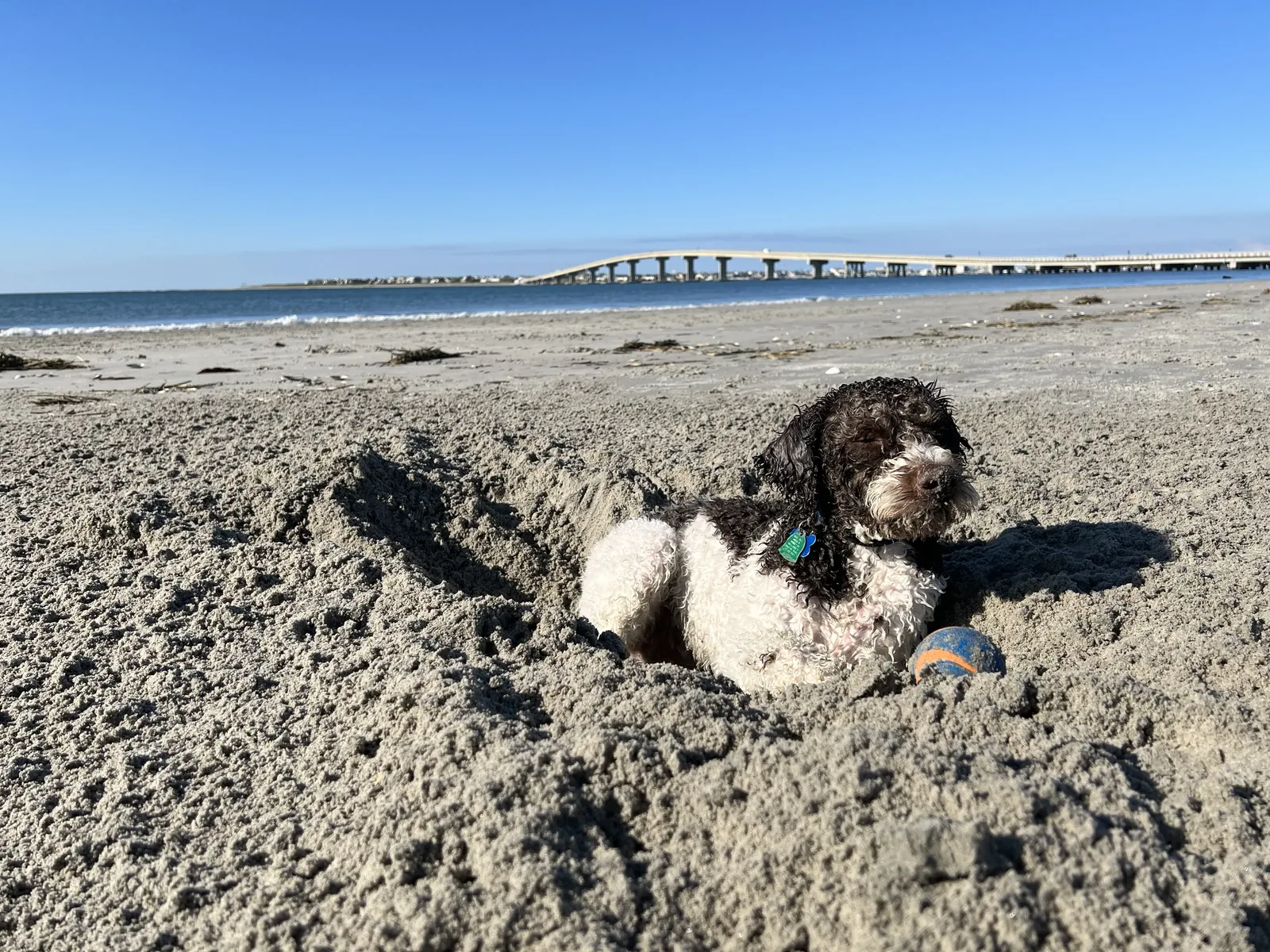
Two places earn a particular mention. Magnuson Park holds the largest off-leash area inside the Seattle city limits, and the only one with a shoreline — a stretch of Lake Washington where dogs actually swim. Across the water in Redmond, Marymoor Park is one of the most-loved off-leash grounds in the region, forty-odd acres with river access for the same purpose. For a dog with webbed feet and a waterproof coat, these are not dog parks so much as the point.
The climate is the other half of the gift. Seattle’s wet, temperate maritime weather — something close to thirty-eight inches of rain across a long, soft season — is a fair imitation of the breed’s original country, and the coat that defines the Lagotto does exactly what it was built to do in it. We will be honest about the trade, the same one we make at home: a coat that sheds water does not shed mud, and the grooming rhythm matters more in a wet city than a dry one.
The Work
Some of the Best Truffle-Dog Work in the Country Is Down the Road
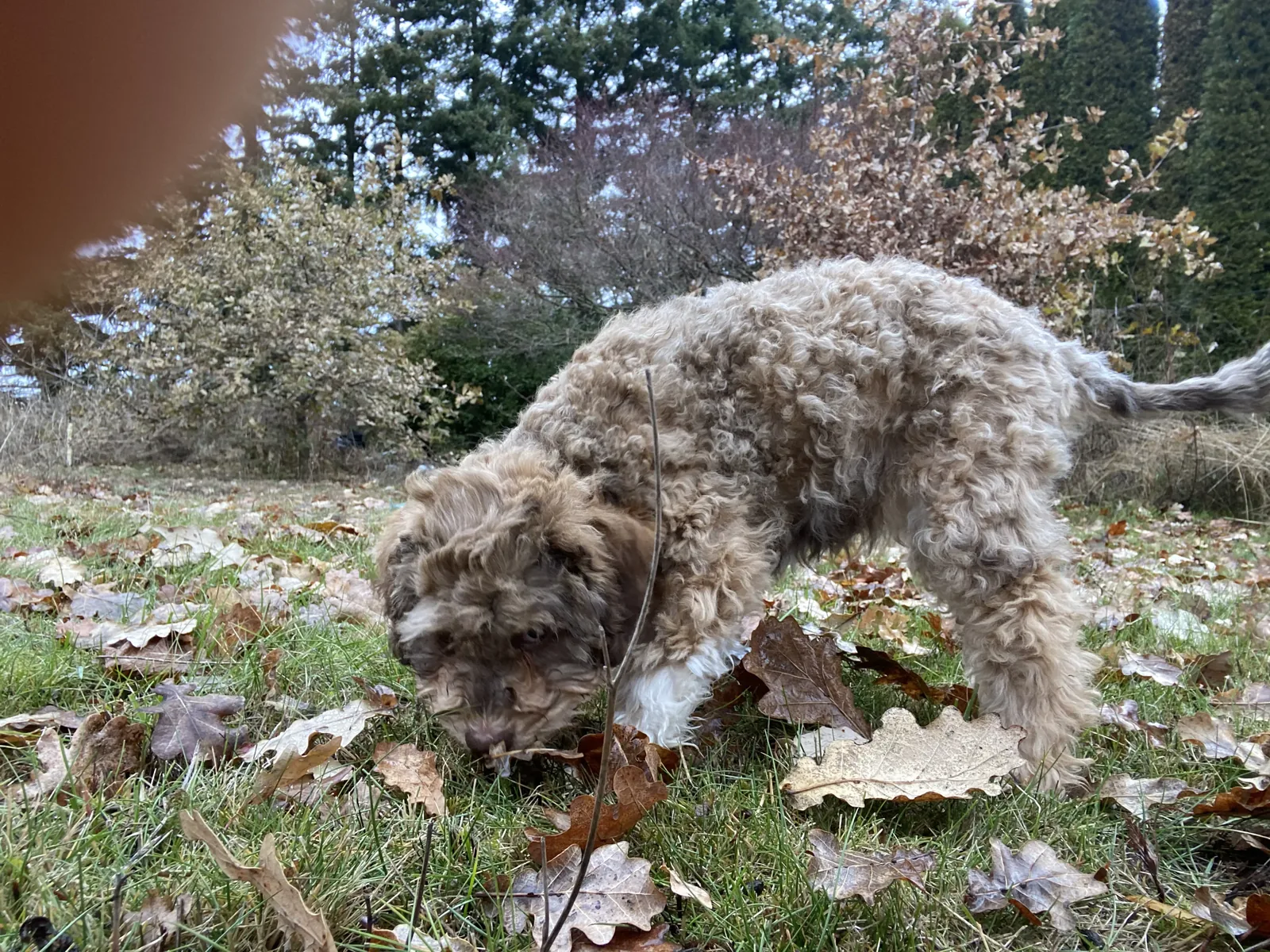
For a breed whose entire identity is truffle work, Seattle holds a genuine piece of luck: it is home to one of the most recognized truffle-dog operations anywhere, Alana McGee’s Truffle Dog Company. What Ahimsa is to kind training, the Truffle Dog Company is to the nose — a Seattle name with a national reach.
We know Alana, and the road runs both ways: we send families her direction, and she sends people ours. We have driven down to collect truffles she had found and carry them on to a show — the kind of small, real errand that only happens between people who actually do the work. We mention her here not as an endorsement anyone paid for, but because it is the plain truth of the local landscape: if your Lagotto’s nose is going to become a skill rather than a party trick, Seattle is one of the best places in the country to make that happen.
What it means for a Seattle family is simple. The instinct we begin before eight weeks has, twenty minutes away, somewhere serious to go — from a first scent class to real foraging in the Cascades. Our essay on the Lagotto and the truffle is where to start reading; the Truffle Dog Company is where to go when you are ready to work.
Raising Well
A Town That Helped Teach the Country to Train Kindly
Seattle has an outsized place in the world of force-free, positive-reinforcement dog training, and that matters more for this breed than it would for a tougher one. The Lagotto is soft, sensitive, and deeply biddable; it blooms under patient, reward-based work and shuts down under a heavy hand. A city full of good, kind trainers is a real asset when you are raising one.
Ahimsa Dog Training is the institution here — a force-free Seattle school we have pointed families to for years. It is also the birthplace of something bigger: Behavior Adjustment Training, or BAT, a method now used by trainers around the world, was developed by Grisha Stewart, who founded Ahimsa in Seattle before selling it and moving on. The method outgrew the city, but it started in it, and the school she built is still doing the work.
None of this replaces the foundation a puppy leaves us with. We start structured socialization long before eight weeks, and every family goes home with a plan. But when it comes time to build on that foundation, a Seattle owner has, close to hand, some of the best kind-training culture in the country to build with.
Practicalities
An Easy Drive from Lynden
Of all our out-of-town families, Seattle’s have it easiest. We are in Lynden, in the far northwest corner of the state — about a hundred miles, roughly two hours straight up I-5. Most Seattle-area families make pickup day a single, unhurried day trip: up in the morning, an afternoon with the litter, home by evening with a puppy who has had a calm start rather than a frantic one.
For families flying in from farther out, Bellingham International Airport is twenty-five minutes from the property with direct service from several western cities, and Sea-Tac is the two-hour option with every connection in the world. We do not ship puppies as cargo, ever; out-of-area placements are planned around an in-person pickup, and we walk every family through the first ride and the first night before they go. The Puppies & Process page covers how placement works, our Pacific Northwest page looks at why the region suits the breed, and the Washington page covers the home ground in full.
Be notified about the autumn 2026 litter
Leave your email and we will let you know when placement decisions open. To reserve a place, a $500 deposit and a conversation put you on the waitlist.
Beginning the conversation is as simple as writing to us directly. We read everything ourselves.
Questions
Questions Seattle Families Ask
How far is Northwest Lagotto from Seattle?
About a hundred miles — roughly two hours straight up I-5 — from our place in Lynden, near the Canadian border. Most Seattle-area families make pickup day a comfortable single-day round trip. Bellingham International Airport is about twenty-five minutes from us for anyone flying in.
Is a Lagotto a good fit for Seattle’s climate?
Yes — unusually so. The Lagotto is a water retriever with a dense, waterproof coat built for a wet, temperate country, and Seattle’s maritime climate suits it about as well as anywhere in America. The honest trade is mud: the coat that sheds water holds clay, so the grooming rhythm matters through the wet months.
Where can I do truffle or scent work with a Lagotto near Seattle?
Seattle is home to Alana McGee’s Truffle Dog Company, among the most recognized truffle-dog operations anywhere — a genuine advantage for a breed defined by the work. Families can begin with a scent class and go as far as real foraging. Our essay on the Lagotto and the truffle is a good place to start.
Do you connect Seattle owners with one another?
Yes, if they want it. Our owner portal carries a private, opt-in Community Directory, and the largest concentration of our dogs lives around Seattle, so it is genuinely useful here — a way for families to find each other for walks, swims, and reunions. Participation is entirely voluntary.
Are there puppies available now?
Availability changes by season. An autumn 2026 litter — Blanca bred to MBIS NBISS GCHS Horizon All American — is currently open for inquiries. The announcement page carries the full details, and our waitlist page explains how placement works.