I do not know if I am a great breeder. I know what I am trying to be. I know what I have learned from the times I fell short. And I know that the question itself, asked sincerely, asked often, matters more than any answer I could give you about myself.
This essay is not about Northwest Lagotto. It is about the question. If you want the practical version, the checklist and scorecard you can use while evaluating breeders, read the companion guide. And if you are looking for a breeder, of any breed. I hope it gives you a way to evaluate what you find.
The Question Behind the Question
When most people ask “what makes a great breeder,” what they are really asking is: how do I know I can trust this person with something that matters to me?
That is a fair question. You are about to bring a living creature into your home, a creature whose health, temperament, and genetic soundness were determined by decisions made months or years before you entered the picture. You are trusting that those decisions were made well. You are trusting that the person who made them was guided by something more durable than profit, more rigorous than good intentions, and more candid than marketing.
The industry does not make this easy. The word “breeder” covers an enormous range, from large-scale operations that produce puppies as a commodity, to hobbyists who breed a single litter from a beloved pet, to dedicated program breeders who have spent decades building and refining a genetic line. The credentials that are supposed to help you distinguish between them, AKC registration, breed club membership, health testing, are necessary but not sufficient. They are the floor, not the ceiling.
What I want to describe is the ceiling. Not as a claim about myself, but as a set of principles that I believe define the work when it is done well, and that I have watched the best breeders in this breed embody consistently, over years, in ways that are mostly invisible to the families who benefit from them.
Seven Principles, and the Stories Behind Them
Click any principle to read the thinking behind it.
Every breeding animal in our program is tested for Lagotto Storage Disease, Benign Familial Juvenile Epilepsy, hip and elbow dysplasia through OFA, and eye conditions through annual ACVO examination. These are not optional extras. They are the minimum standard for responsible breeding in this breed, and any breeder who presents them as a distinguishing feature rather than a baseline expectation is telling you something about how they define the floor.
The harder question is what a breeder does with the results. A clear hip score is easy to celebrate. A borderline result is where character shows. The breeder who pulls a dog from their program based on an ambiguous result, knowing that dog might have been fine, but unwilling to take the chance, is the breeder who is making decisions for the breed, not for themselves.
Not every family that contacts us will receive a puppy from us. Not because there is anything wrong with them, but because the match has to serve the dog. A high-energy puppy placed in a sedentary household is not a successful placement. It is a problem that has been transferred. A timid puppy placed with a family of young, boisterous children is a setup for stress on both sides.
This means we sometimes say no. It means we sometimes ask families to wait for a litter whose temperament profile is a better fit. It means we have returned deposits rather than place a puppy we did not feel confident about. These conversations are never easy. But the alternative, placing a puppy because the buyer is ready, rather than because the match is right, is a failure of the one responsibility that defines the work.
Every health test result in our program is available on request. Not a summary. The actual results. We share our OFA numbers, our genetic screening reports, and our ACVO certifications openly, because a family making a fifteen-year commitment to a living animal deserves to see the data that informed the decision to breed.
Transparency also means being upfront about what we do not know. No breeder can guarantee a puppy’s lifetime health. Genetics are probabilistic, not deterministic. A responsible breeder can show you the evidence behind their decisions and explain the reasoning. An irresponsible one will guarantee outcomes that no responsible person can guarantee.
A puppy that leaves our home is still our responsibility. Not legally, contractually, the ownership transfers. But morally, the connection does not. We check in with every family. We answer questions at midnight. We provide guidance on teething, adolescence, grooming, training, and every other challenge that arises in the life of a Lagotto, not because it is good business, but because we brought this dog into the world and we owe it a lifetime of advocacy.
Our purchase contract includes a clause that is uncommon among breeders: if at any point in the dog’s life, for any reason, a family can no longer keep their dog, we expect to be contacted first. We will take the dog back. No Northwest Lagotto should ever end up in rescue. That is a personal commitment, and it does not expire.
The Lagotto Romagnolo nearly went extinct in the 1970s. Every dog in the breed today descends from a narrow genetic base. This means that genetic diversity is not an abstract concern. It is a concrete, measurable reality that affects every breeding decision.
A breeder working in a bottleneck breed has an obligation to the breed’s future, not just to the next litter. This sometimes means choosing a mate that increases diversity over one that produces the showier puppy. It means considering the breed’s gene pool alongside your own program’s goals. It means accepting that what is best for your kennel this year might not be what is best for the breed in ten years, and acting accordingly.
We follow the full Puppy Culture protocol from day three. Not a modified version. Not an abbreviated version. The complete program, Early Neurological Stimulation, startle recovery, barrier challenges, manding, novel surface and sound exposure, individual socialization, timed to the developmental windows that the science identifies.
This is not a marketing advantage. It is a responsibility. The first eight weeks of a puppy’s life represent the most neurologically consequential period it will ever experience. A breeder who treats those weeks as holding time, keeping the puppies alive and fed until they are old enough to sell, is wasting the one period in that dog’s life when the most good can be done.
Including me. Ask for health test results. Ask to speak with past families. Ask how the puppies are raised, and ask for specifics, not “we socialize them,” but how, when, and what does it look like. Ask what happens if the match does not work out. Ask what the breeder’s spay/neuter requirements are, and why.
A breeder who welcomes these questions is telling you something important about how they operate. A breeder who deflects them, who answers with credentials instead of specifics, or who makes you feel like scrutiny is an insult. That is also telling you something.
The Decisions That Define You
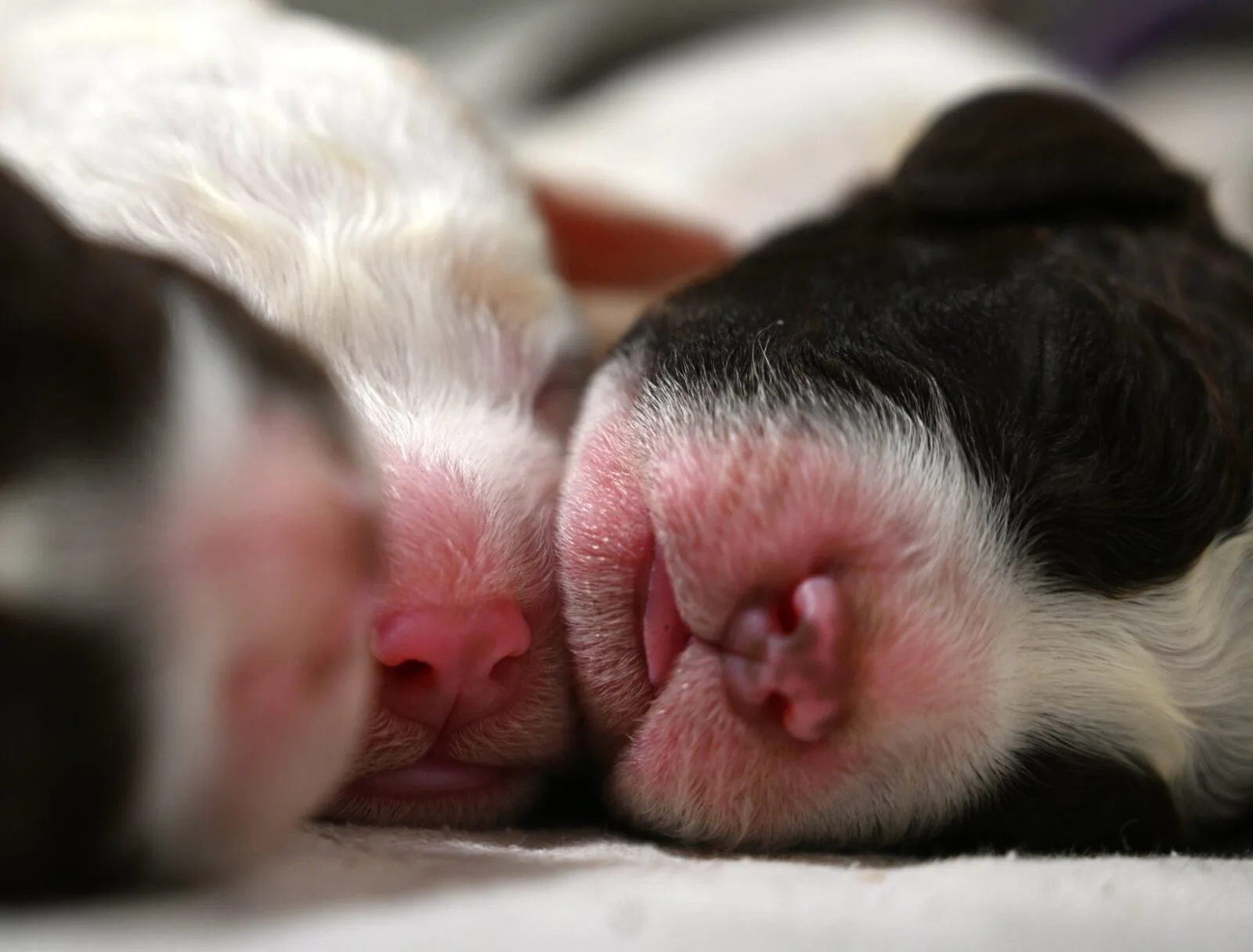
The whelping room at 2 a.m. This is where the principles meet reality.
The principles above sound straightforward when written down. They are not straightforward when they cost you something. Here is where the distance between a good breeder and a great one shows itself, in the decisions that nobody sees, that nobody would know about if the breeder chose differently.
A breeder’s reputation is not built by the puppies they sell. It is built by the decisions they make when no one is watching, and when the right decision is the harder one.
What I Have Learned from Getting It Wrong
I promised this essay would be honest. That version includes the mistakes.
I underestimated the importance of breeder support in the early years. I placed puppies with excellent families and assumed they would figure it out. Most did. But the ones who struggled, with teething, with adolescence, with the sheer intensity of a working breed in a family home, needed more from me than a phone number. I learned that placement is not the end of the job. It is the beginning of a different kind of job, and I was not doing it well enough.
I prioritised conformation over temperament in a way I would not repeat. Early in my program, I was drawn to the show ring and to the dogs that moved beautifully. I still care about structure. It matters for the dog’s long-term health. But I have come to believe that temperament is the first criterion, not the second. A dog with average structure and exceptional temperament will bring more joy to a family than a dog with flawless conformation and a difficult disposition. I wish I had understood this sooner.
I was not transparent enough about what I did not know. There were times when a family asked me a question and I gave an answer that sounded more certain than it was, because I did not want to appear unsure. A breeder who says “I don’t know, but I will find out” is more trustworthy than a breeder who has a confident answer for everything. I have learned to say “I don’t know” more often, and I have learned that it makes the relationship stronger, not weaker.
The Invisible Hours
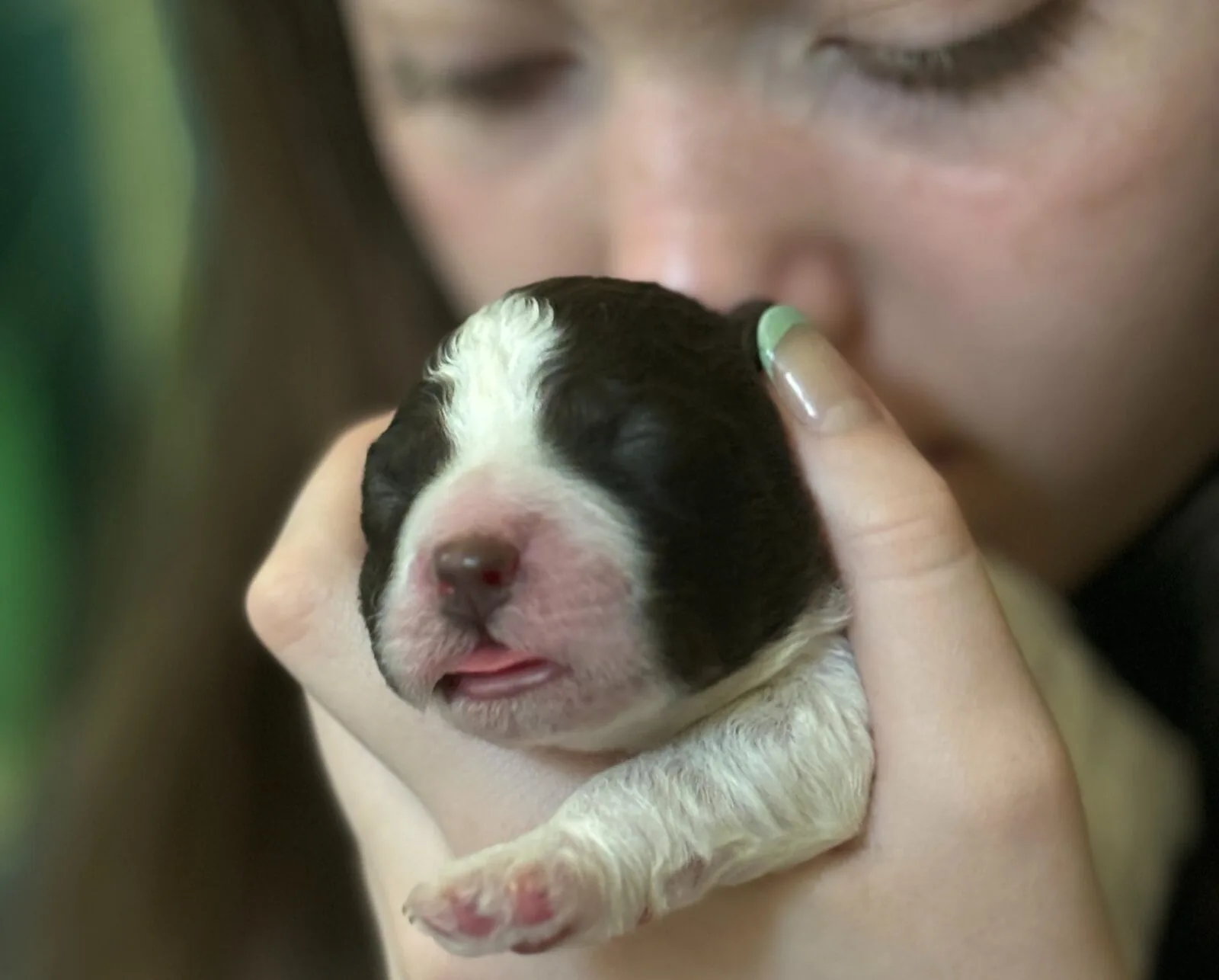
Day four. ENS in progress. The part no one sees.
Families see the puppy. They see the eight-week-old bundle of energy that arrives in their home, already manding, already confident, already sociable. What they do not see is the work that produced that puppy, and most of that work happens before the family even knows the litter exists.
The green bar on the left is the part no one sees. The gold bar in the middle is the part everyone sees. The green bar on the right is the part most breeders stop doing. A program that serves the breed operates across the full span, not just the visible centre.
The Answer I Keep Coming Back To
I have been asked this question, “what makes a great breeder?”, by prospective families, by fellow breeders, and by myself, late at night, after a whelping or a difficult placement or a decision I was not sure about.
The answer I keep coming back to is not a credential, or a list of health tests, or a show record. It is this:
A great breeder is someone who is still asking the question.
The moment you stop asking, the moment you believe you have arrived, that your program is above scrutiny, that your methods are beyond improvement, is the moment you begin to fail the dogs and the families who depend on you. The question is the compass. Not the answer.
I am still asking. I expect to be asking for as long as I do this work. And I hope that is worth something to the families who choose to trust us with the beginning of their story with a Lagotto.
If You Have Read This Far
You are the kind of person we want to hear from. Not because you are ready to buy a puppy. You may not be, and that is perfectly fine. But because the person who reads an essay like this, who cares enough to think about what a breeder should be, is exactly the kind of person who will do well with a Lagotto.
The next step is a conversation. No commitment. No pressure. Just two people talking about whether the timing, the fit, and the dog are right.