Put a Lagotto Romagnolo and a Portuguese Water Dog side by side in photographs and you might struggle to tell which is which: two curly, woolly, water-loving breeds in the same brown-and-white family.
Put them side by side in your living room and the difference is immediate. These are not two versions of the same dog. They are two distinct working breeds, shaped by different jobs on different coasts of Europe, and the contrast that matters most, size, energy, and temperament, is the one the photographs hide. (We also compare the Lagotto with the Spanish Water Dog, its corded-coat cousin.) A family choosing between them is really choosing between two quite different daily lives.
This is the side-by-side: where the two breeds genuinely differ, where they are alike, and which one suits which kind of home.
Two Water Dogs, Two Different Jobs
Both breeds earned their living in the water, which is why they look related. The curly, near-waterproof coat is a working adaptation both share. But the jobs underneath were different, and the dogs were shaped to match. The Portuguese Water Dog worked the Atlantic coast of Portugal alongside fishermen: herding fish toward nets, retrieving gear and lost tackle from the sea, carrying messages between boats. It is, at heart, an athletic, exuberant, tireless water-working partner, a dog bred to swim hard all day and stay glued to its handler.
The Lagotto Romagnolo started as a water retriever in the marshes of Italy’s Romagna, but its modern identity is something no other breed holds: it is the only purebred dog recognized specifically as a truffle dog. When the marshes were drained, the breed was reinvented around the nose rather than the water, and a degree of independent, scent-driven focus was bred in. The result is a dog whose defining trait is not athletic exuberance but a working nose and a more measured temperament. Two water dogs; one became a swimmer, the other became a scent specialist.
| Lagotto Romagnolo | Portuguese Water Dog | |
|---|---|---|
| Size | 16–19 in · 24–35 lb. Small-to-medium; compact enough to lift, travel with, and keep in a modest home. | 17–23 in · 35–60 lb. A solid medium; a male at the top of the range is nearly twice a Lagotto. |
| Lifespan | 15–17 years per the breed club, unusually long-lived for its size. | ~12–14 years, typical for a robust medium breed, a few years shorter. |
| Original job | Marsh water retriever, reinvented as the world’s only recognized truffle-hunting breed. | Fisherman’s working partner, herding fish toward nets, retrieving gear, swimming hard all day. |
| Coat | Curly, wool-like, low-shedding; regular professional grooming to prevent matting. | Curly or wavy, low-shedding; a broadly comparable grooming commitment. |
| Energy | Moderate and substantially mental. A Lagotto is tired out as much by its nose as by running. | High and physical, an athlete that wants sustained movement, ideally in water. |
| With strangers | Naturally reserved until introduced; devoted to its own family. | Outgoing and exuberantly social; greets the world as a friend. |
| Training style | Very bright, but an independent thinker; rewards engaged, reward-based work. | Very bright and biddable; the classic eager-to-please, handler-focused worker. |
| Best-fit home | Wants a calm presence indoors and a job for the nose. | A very active household with the time, and ideally the water, to match. |
The Size Difference Is Real
This is the first thing a family notices, and it is bigger than the photos suggest. The Lagotto is a small-to-medium dog. The Portuguese Water Dog is a solid medium, and a male at the top of the range is a substantially larger animal.
For a family weighing the practical realities, the size of the home, the car, how much dog you want at the end of the leash, and how many years you hope to have together. This is not a small distinction. The Lagotto is the more compact, longer-lived of the two; the Portuguese Water Dog is the bigger, more physically imposing dog.
Energy and Temperament: the Decisive Split
If size is what families notice first, energy and temperament are what they live with every day, and this is where the two breeds diverge most. The difference is not that one is good and one is difficult; it is that they ask for different households.
The Portuguese Water Dog is exuberant. Outgoing, high-energy, enthusiastically social, eager to please, the classic handler-focused working dog that wants to do things with you, ideally involving water and movement, for as much of the day as you can manage. It greets the world, including strangers, as a friend. For an active family that wants a robust, sociable, up-for-anything companion and can meet the considerable exercise demand, it is a wonderful dog. Under-exercised, that same energy turns to trouble.
The Lagotto is more measured. Affectionate and deeply bonded to its family, but calmer in the home and naturally reserved with strangers rather than exuberantly social, a watchdog-and-truffle-dog heritage showing through. Its energy is real but more moderate than the Portuguese Water Dog’s, and a good deal of it is mental: a Lagotto is tired out as much by using its nose as by running. For a family that wants an active dog that is also a calm presence indoors, and that finds the idea of scent work appealing, the Lagotto fits in a way the busier Portuguese Water Dog may not. We cover the breed’s character in full, including the real caveats, in our temperament essay.
Put simply: the Portuguese Water Dog brings more exuberance and more drive to swim and go; the Lagotto brings a quieter house and a working nose. Match the dog to the household you actually have.
Where the Two Are Genuinely Alike
For all those differences, several things really are similar, and it is worth being clear about them so the comparison stays fair. Coat and shedding: both are low-shedding, curly or woolly breeds often called hypoallergenic, and both need regular professional grooming to prevent matting. Neither is a wash-and-go dog, and the grooming commitment is broadly comparable. (No breed is truly non-allergenic; our hypoallergenic essay explains why, and why meeting a dog is the only real test.) Intelligence and trainability: both are very bright and very trainable, and both do badly with harsh methods, though the Portuguese Water Dog is often the more biddable and the Lagotto the more independent thinker. Love of water: both adore it. Exercise needs: both are real working breeds that need daily activity and will invent their own if bored.
So the lazy version of this comparison, that they are nearly the same dog, is half right. On the coat and the brains and the water, yes. On the size, the energy, the sociability, and the lifespan, not at all.
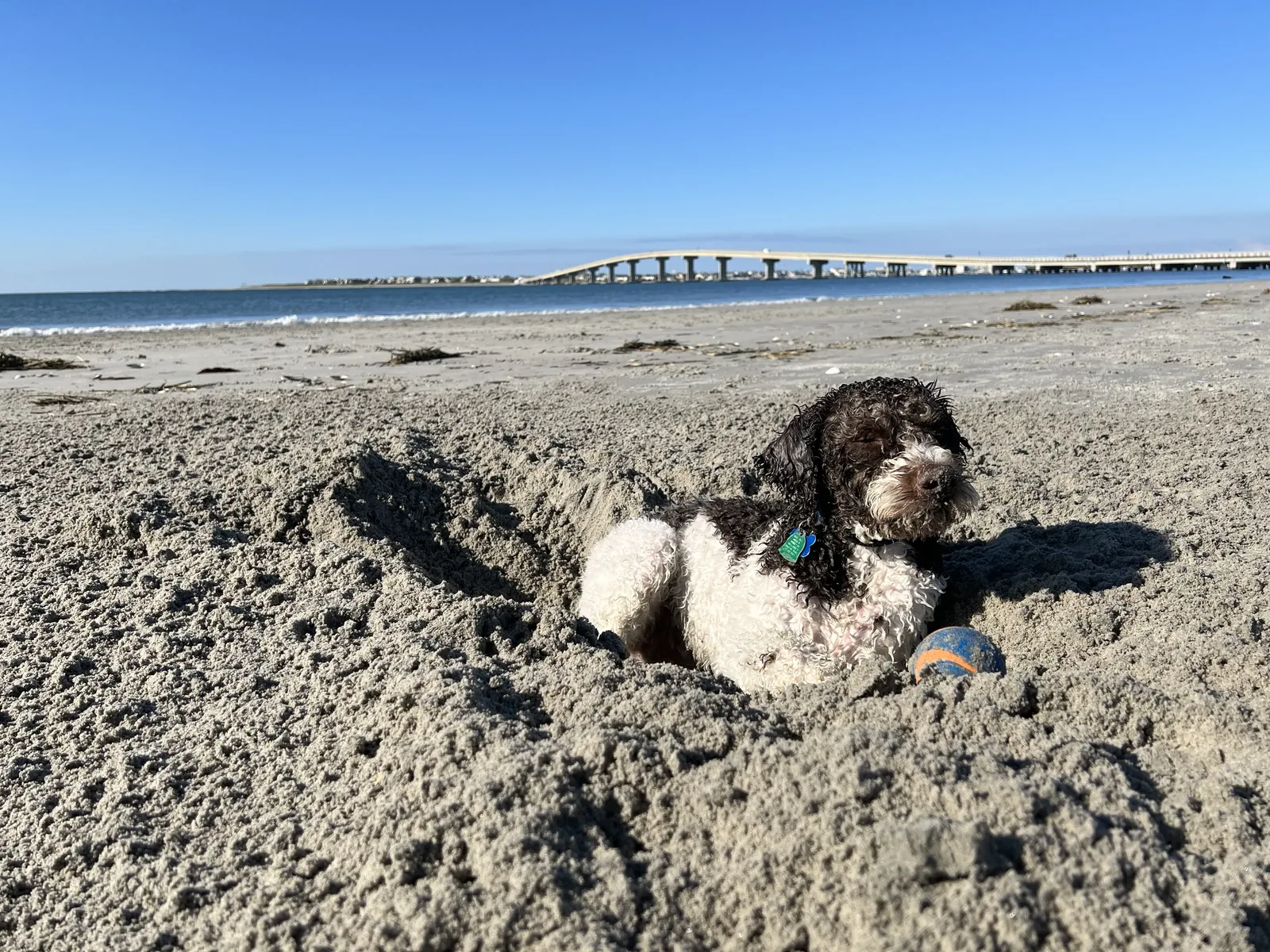
The photographs show two similar dogs. Daily life shows two different ones.
Which Breed Fits Your Home
Choose aLagotto Romagnolo if…
- You want a smaller, more compact dog, one you can lift, travel with, and keep comfortably in a modest home.
- You want a calmer presence indoors: affectionate with family, without needing to greet the entire world with its whole body.
- You are drawn to the nose, scent work and a genuine working specialty appeal to you, and you are happy to give that nose a job.
- You value a very long-lived companion.
- You are comfortable with a dog that thinks for itself, and rewards patient, engaged training over demands for blind obedience.
Choose aPortuguese Water Dog if…
- You want a bigger, more robustly athletic dog and have the active lifestyle to match it, ideally one involving water, because few breeds love it more.
- You want an exuberant, outgoing, enthusiastically social companion that greets strangers as friends and wants to be in motion with you for much of the day.
- You can commit to substantial daily exercise, and will feel the difference if you fall short.
- You prefer the eager-to-please, handler-focused working style.
- The difference in typical lifespan is one you have weighed and accept.
For the right high-energy household, the Portuguese Water Dog is a magnificent dog. For the household that wants the quieter house and the working nose, the Lagotto is the answer, and the choice between them is really a choice between two daily lives.
The Honest Bottom Line
These two breeds get cross-shopped because they look alike, but the decision between them should rest on the things the photographs do not show. If you want a compact, long-lived, scent-driven dog that is calm indoors and reserved by nature, the Lagotto is your breed. If you want a larger, exuberant, water-mad athlete for an active family, the Portuguese Water Dog is. Both are intelligent, low-shedding, water-loving, and genuinely rewarding, in the right home.
If the Lagotto sounds like the better fit for your household, our full breed guide covers everything about living with one, and we are always glad to talk through whether the breed, and our dogs, suit your home. And if the Portuguese Water Dog sounds more like your dog, we would rather you choose the breed that fits your life. The goal is the right dog for your family, not simply a Lagotto.