The Lagotto Romagnolo and the Spanish Water Dog turn up in the same searches for a reason: both are curly, low-shedding, water-loving breeds that the average person would file under “some kind of doodle” at a glance.
They are nothing of the kind, and they are not much like each other either. One is an Italian truffle dog from the Sporting group; the other is a Spanish herding dog that also retrieves from water. They carry different coats, maintained in completely different ways, and they bring different working instincts into your living room. The glance gets it wrong twice over. (We also compare the Lagotto with the closely-related Portuguese Water Dog.)
This is the side-by-side: the coat difference that surprises everyone, the heritage that shapes each temperament, and which breed belongs in which home.
A Truffle Dog and a Herding Dog
Start with what each breed was actually for, because it explains nearly everything that follows. The Spanish Water Dog is, first and foremost, a herding dog. Developed in Spain to herd and guard flocks of sheep, and, because it lived near water, to retrieve from it too. It is a dual-purpose working dog that the AKC files in the Herding Group. That heritage is written deep into the breed: a strong work ethic, real watchfulness, an instinct to manage and guard its people and territory, and a busy, switched-on mind that wants a job.
The Lagotto Romagnolo comes from an entirely different tradition. It began as a water retriever in the Italian marshes, but its modern identity is unique among all breeds: it is the only purebred recognized specifically as a truffle dog. Its working drive runs through its nose, not through herding or guarding, and the breed was deliberately shaped toward a more measured, less territorial temperament, a dog that searches rather than herds. Two curly water dogs; one watches the flock, the other follows the scent.
| Lagotto Romagnolo | Spanish Water Dog | |
|---|---|---|
| Breed group | Sporting. A water retriever turned scent specialist, no herding background. | Herding. A dual-purpose flock dog that also retrieves from water. |
| Original job | Marsh water retriever, reinvented as the world’s only recognized truffle-hunting breed. | Herding and guarding sheep in rural Spain, with waterside retrieving on the side. |
| Coat & care | Clipped and combed, conventional grooming for a dense, woolly coat. | Corded, never brushed, cords separated by hand, usually shorn down once a year. |
| Size | 16–19 in · 24–35 lb. Small-to-medium and compact. | Roughly 16–20 in, tending heavier and more robustly built, a working herder’s frame. |
| Lifespan | 15–17 years per the breed club, unusually long-lived for its size. | ~12–14 years, typical for an athletic medium breed. |
| Temperament | Measured and reserved; alerts but does not guard. Drive channelled into the nose. | Watchful and protective; intensely bonded, often wary of strangers, with a strong drive to work. |
| Owner fit | A more straightforward companion for a typical engaged, active family. | An active, experienced household ready to channel real herding intensity. |
The Coat: the Difference No One Expects
If you take one practical thing from this comparison, take this, because it catches families completely off guard. The two breeds have curly coats that photograph similarly and are maintained in opposite ways.
This is not a small stylistic footnote. A family expecting to brush their curly dog will find that a Spanish Water Dog should not be brushed at all, and that maintaining a corded coat well is a genuine skill with its own learning curve. The Lagotto’s coat, by contrast, is handled the conventional way, clipped, combed, trimmed. Neither sheds much, and both are often called hypoallergenic (with the usual caveat that no breed truly is), but the day-to-day reality of coat care could hardly be more different.
Temperament: Watchful vs Measured
The herding-versus-truffle split shows up most clearly in temperament, and this is where the two breeds ask for different owners.
The Spanish Water Dog is a working herder at heart. Loyal, intensely bonded, diligent, and naturally watchful, often wary of strangers and inclined to guard its family and territory in a way that comes straight from the flock. It is highly intelligent and highly trainable, but it is a dog with strong opinions and a strong drive to do, and it can be a handful for an owner who is not ready for that intensity. It also tends to a higher impulse to roam and a real prey drive. For an active, experienced household that wants a devoted, protective, working-minded companion, it is a superb dog.
The Lagotto is more measured. Affectionate and deeply bonded too, but reserved rather than guarding. It alerts, but it does not carry the herding dog’s instinct to manage and protect. Its drive is channelled into its nose, which means a good deal of its considerable intelligence is satisfied by scent work rather than by a job to boss. For many families, that makes the Lagotto the more straightforward companion of the two, still a real working breed with real needs, but a calmer, less territorial presence in the home. Our temperament essay covers the breed’s character in full.
Where the Two Are Alike
For all those differences, the breeds do share real common ground, and it is worth naming plainly. Both are highly intelligent and trainable, and both do badly with harsh methods. They want engaged, reward-based work. Both are low-shedding and often suit allergy-conscious households, within the limits of what any breed can promise. Both love water and swim happily. Both carry a real prey drive that warrants care around small animals. And both are genuine working breeds that need daily physical and mental exercise and will find their own trouble if under-stimulated. Neither is a low-effort, wash-and-go pet.
So the breeds are alike in the ways that make them both demanding-but-rewarding dogs for engaged owners. They differ in the ways, coat, heritage, temperament, that determine which engaged owner each one suits.
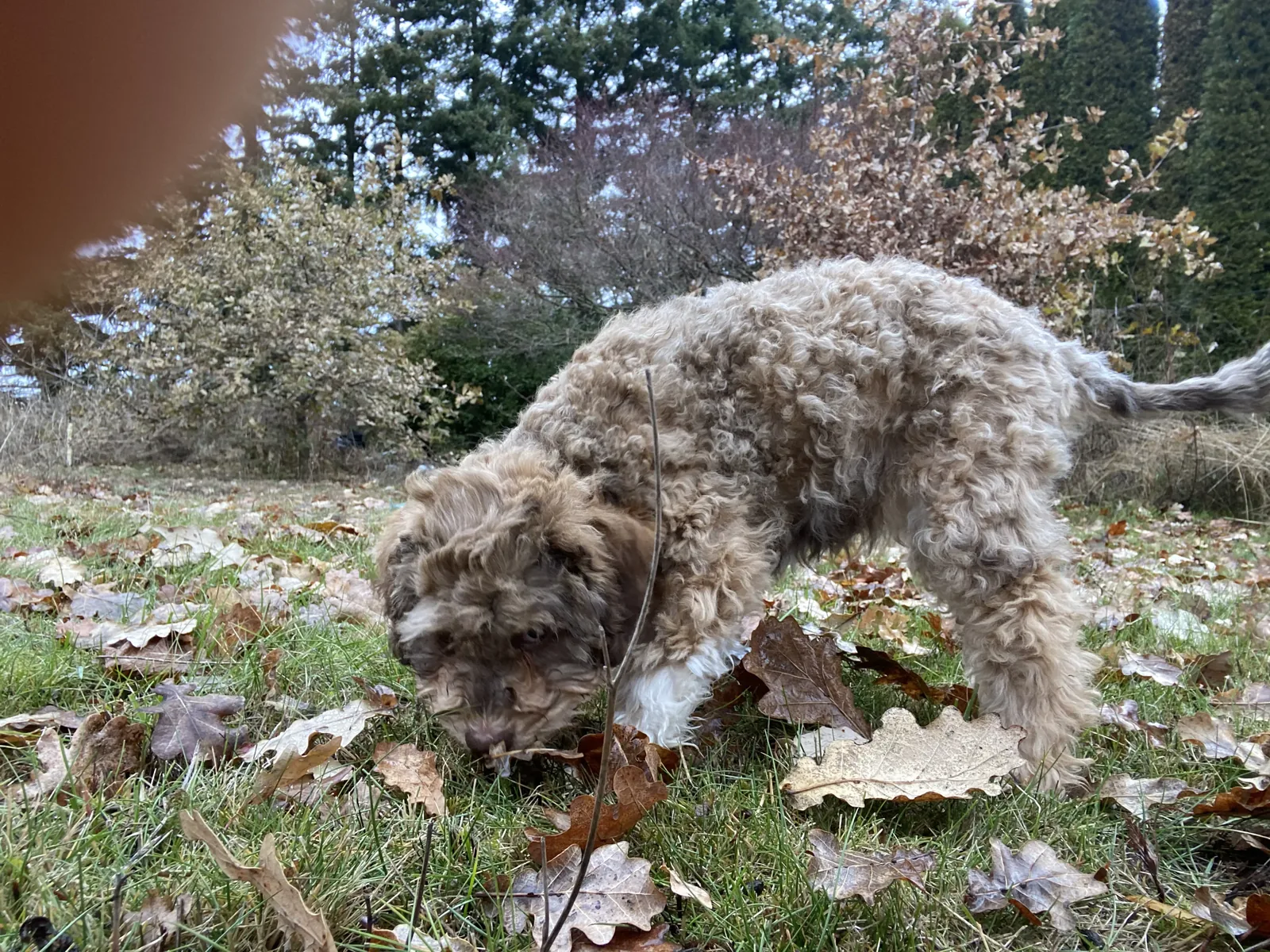
One watches the flock; the other follows the scent. The coats only look alike.
Which Breed Fits Your Home
Choose aLagotto Romagnolo if…
- You want a dog whose drive runs through its nose rather than through herding and guarding, scent work appeals to you, and a calmer, less territorial dog suits your home.
- You would rather maintain a coat the conventional way, clipped and combed, than learn to manage cords.
- You want an affectionate, reserved companion that alerts but does not feel compelled to guard, and fits comfortably into an ordinary active family.
- You value a very long-lived dog.
- You are happy to give a working breed a job, even a small one, without needing a dog that wants to run the whole household.
Choose aSpanish Water Dog if…
- You are drawn to a true herding dog, watchful, diligent, protective, with a strong drive to work, and have the active, experienced household to channel that drive well.
- You are genuinely interested in the corded coat and willing to learn its particular maintenance, or to keep it shorn.
- You want a devoted, intensely bonded dog that will watch over your family and your home, and you are ready for the intensity that comes with that.
- You can meet the substantial exercise and mental-stimulation needs of a working herding breed every day.
For the right owner, the Spanish Water Dog is an exceptional and deeply loyal partner. For the household that wants the scent-driven, conventionally-groomed, more measured dog, the Lagotto is the answer, and knowing which household you are is most of the decision.
The Honest Bottom Line
These two breeds look like cousins and live like neighbors from different worlds. If you want a scent-driven, conventionally-groomed, measured companion that suits a typical active family, the Lagotto is your breed. If you want a corded, watchful, working herding dog and have the experience and lifestyle to do it justice, the Spanish Water Dog is, and it is a wonderful one in the right hands. Both are intelligent, low-shedding, water-loving, and rewarding for owners who engage with them.
If the Lagotto sounds like the better fit for your household, our full breed guide covers everything about living with one, and we are always glad to talk through whether the breed, and our dogs, suit your home. And if the Spanish Water Dog sounds more like your dog, we would rather you choose the breed that fits your life, the right dog for your family matters more than which breed it happens to be.